

Here is the full report: Human right abuses in drone production at Russia’s Yelabuga: How China, Iran, and North Korea are enabling the Russian war machine (pdf)
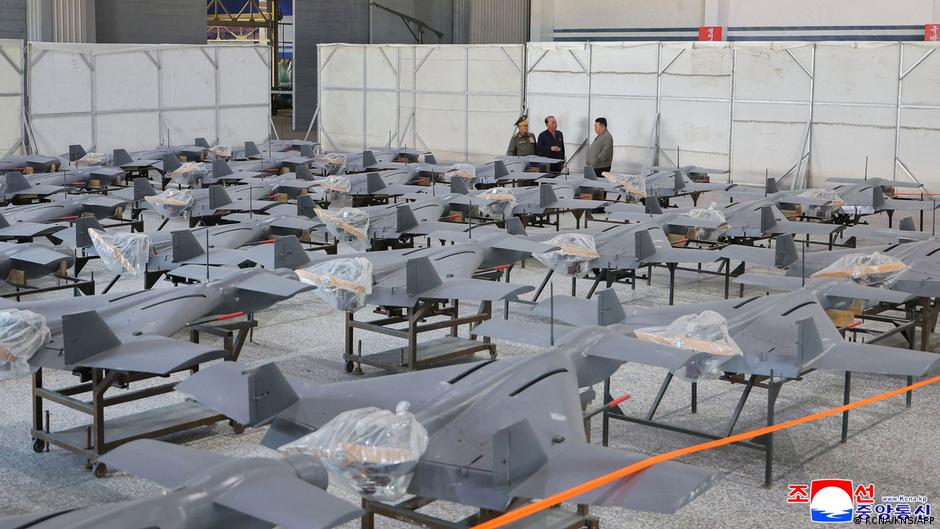
As many as 12,000 North Koreans working at a Russian drone factory are victims of “gross human rights abuses and human trafficking,” according to a new report.
The figures were part of a joint report [that] analyzes how Russia, North Korea, China and Iran are involved in expanding unmanned aerial vehicle (UAV) production at the Yelabuga plant in Tatarstan, and what each country stands to gain.
While Moscow gets access to more than 5,500 drones a month for its war against Ukraine, China benefits from being the main supplier of dual-use components, including batteries, internal electronics, engines and navigation systems.
Iran has supplied Russia with Shahed drones, which has helped Moscow produce upgraded domestic variants, known as Geran.
Meanwhile, North Korea is earning money by retaining as much as 90% of the wages of the laborers, the report stated.
…
How does the human trafficking process work for Global South contries?
1. Recruitment: Social-media advertising and paid influencers promise free airfare, a salary starting at over $500 a month, and work opportunities in catering, hospitality, and production operation. The recruiters target women ages 16 to 22 in countries with high youth unemployment. Advertising in several countries gains credibility from recruitment notices posted on government-related accounts.
2. Testing: Applicants join a Telegram channel and are given a recruiter. They complete a short screening, including a computer game and a 100-word Russian- or English-language vocabulary test and provide documents to human resources, including a passport scan and medical records.
3. Clearance: Applicants’ files are forwarded to the Russian Ministry of Foreign Affairs and then to the Russian embassy in the applicant’s home country. Russia’s Federal Security Service (FSB), the country’s top domestic security and counterintelligence agency, clears prospective workers with a security review. Employment contracts are promised within three weeks of passing the interview process.
4. Debt: The Russian ministry issues an invitation to the applicant; the recruit pays for the visa appointment, and the program books the flight.
5. Arrival: Alabuga staff meet each recruit and escort them to the special economic zone, where the new worker is housed in a company hostel and enrolled in a mandatory Russian-language course.
6. Job: About 90% of foreign recruits are assigned to drone production, where they assemble airframes, handle caustic chemicals, and paint different types of drones.
7. Restrictions: The company deducts costs of airfare, housing, medical care, and language classes from the workers’ pay. Their passports are confiscated, and their movement is restricted. They are fined or threatened if they discuss the drone work. Remitting money can be difficult because of banking sanctions.
The recruiting elements outlined above meet the common indicators of human trafficking outlined by the U.N.: fraudulent inducement, document confiscation, pay deduction, restricted movement, and concealed hazardous work.
…
Maybe China should invade to free the slaves /s
This is directed at a commonly repeated line of bots whenever “China invaded Tibet in the modern era.” is brought up.
Sounds like NK sold their own people into Russian slavery.
I’m surprised NK is OK with this, since they are so committed to workers’ rights.
