

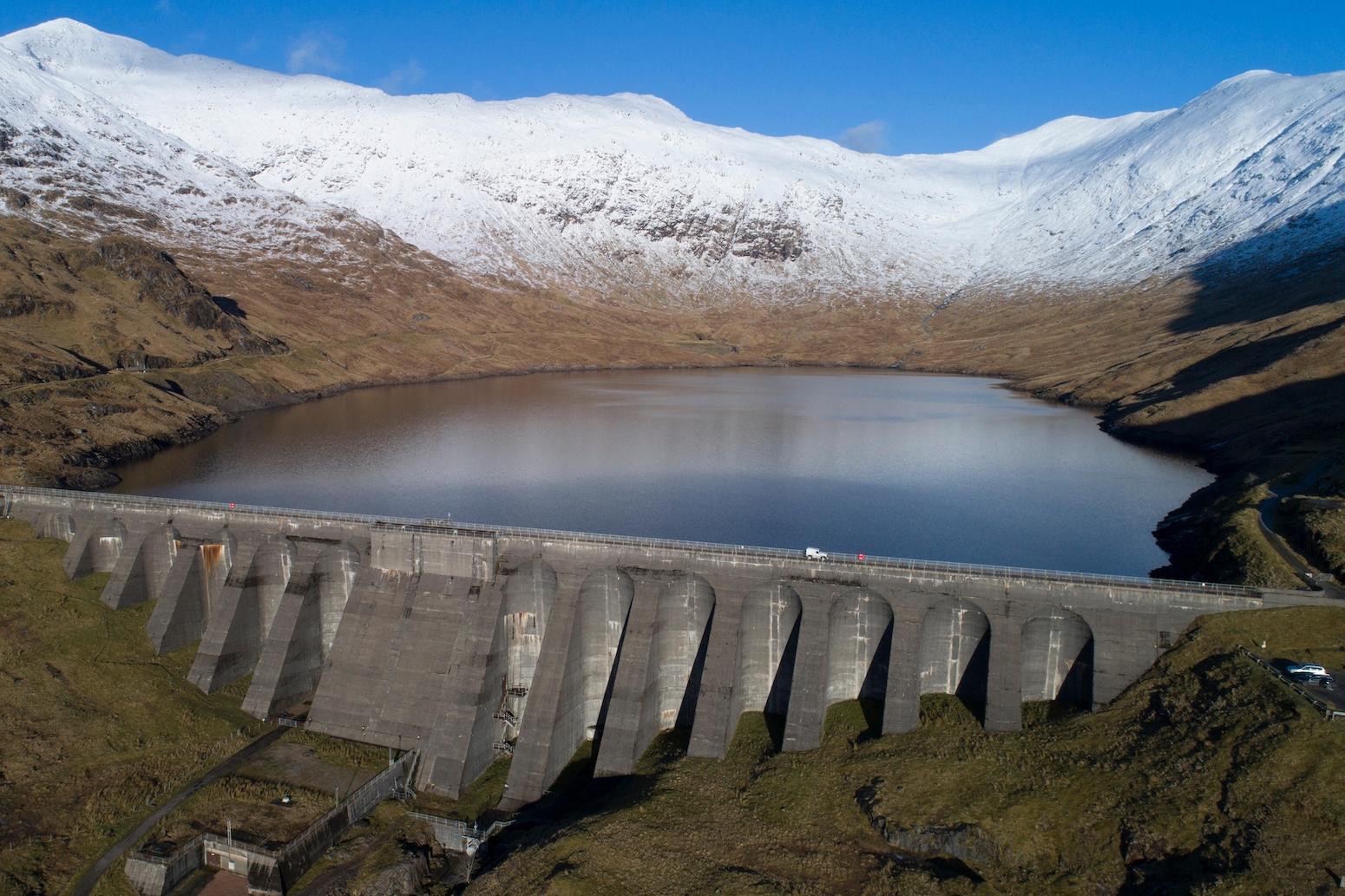
The UK is pioneering the use of “super batteries” that can store energy for long periods, smoothing the output from wind and solar power as the country moves towards net-zero.
It is aiming to build “long-duration energy storage” (LDES) that fills up when supplies are plentiful, to help cover the gaps when the wind does not blow and the sun does not shine.
These periods can last for days or even weeks – sometimes referred to as “dunkelflaute”, a German word meaning “dark doldrums” – whereas the current batteries on the electricity system only last a matter of hours.
The nation’s energy regulator Ofgem has now identified 16 LDES projects that it is “minded to” support under a new “cap-and-floor scheme”.
The technologies selected can be used to store energy for long periods in the form of gravity, chemical processes or electrical charge.
These include pumped hydro, which has dominated long-term storage in the past, through to large lithium-ion batteries, “flow batteries” with novel chemistry and compressed-air storage.
The use of these technologies is expected to cut energy system costs in the UK by more than £24bn between 2030 and 2050.
This Q&A looks at what LDES means and where it can come from, why it is needed and what the UK and others are doing to support its use.