

Some researchers have placed their bets on natural quantum systems such as atoms. To use a single atom as a qubit, you must first isolate and trap it in a vacuum chamber, and researchers have pursued two distinct approaches to doing so. In trapped-ion quantum computing, researchers knock one electron off each atom to get positively charged ions that can be held in place by electric fields. The other approach uses arrays of tightly focused laser beams, called optical tweezers, to trap neutral atoms.
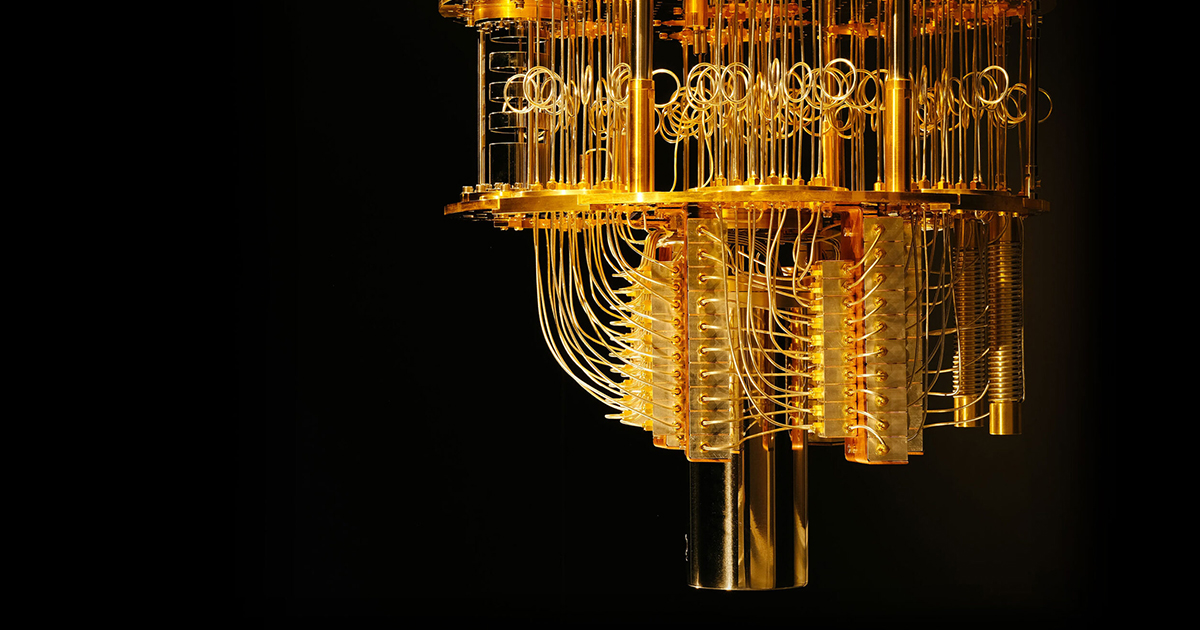
Other researchers are pursuing an alternative approach, called superconducting quantum computing, which involves the design of artificial qubits. Using modified versions of microfabrication processes developed for classical computing, researchers assemble tiny circuits made of metals like aluminum and niobium that become superconductors when cooled to very low temperatures. Housed in special cryogenic systems called dilution refrigerators, these superconducting circuits can act like qubits. Many other qubit candidates have been explored, from electron spins to photons to more exotic quantum systems.
Some really cool photos in this article, Quantum Computers are not bullshit even though hilariously almost everything about them seems like complete bullshit… which isn’t to say we will see practical Quantum Computers proliferating any time soon but they aren’t a vaporware technology the way AI is for example.
The difference is that large amounts of simultaneous calculations can be done with Quantum Computers in a way you can’t tackle fundamentally with Classical Computers. The waves help you find many complex answers much faster at the cost of some degree of confidence that is acceptable for certain applications and when accounted for in architecture.