Oh wow. Didn’t know that. I saw a kidney biopsy in an electron microscope before but I never really learned how they worked because I figured I’d never work with one.
They’re super cool! The reason for the vacuum is that electrons are much more likely to scatter in atmosphere than photons, so you want as little air present in the chamber as possible. Also many microscopes generate their electron beams with a heated tungsten filament (which is soo expensive), so iirc the vacuum prevents it from burning up quickly.
Electron miscroscopes often have a “low vacuum” setting for when samples can’t be subjected to such a high vacuum. Usually you need some training before anyone will let you use their electron microscopes.


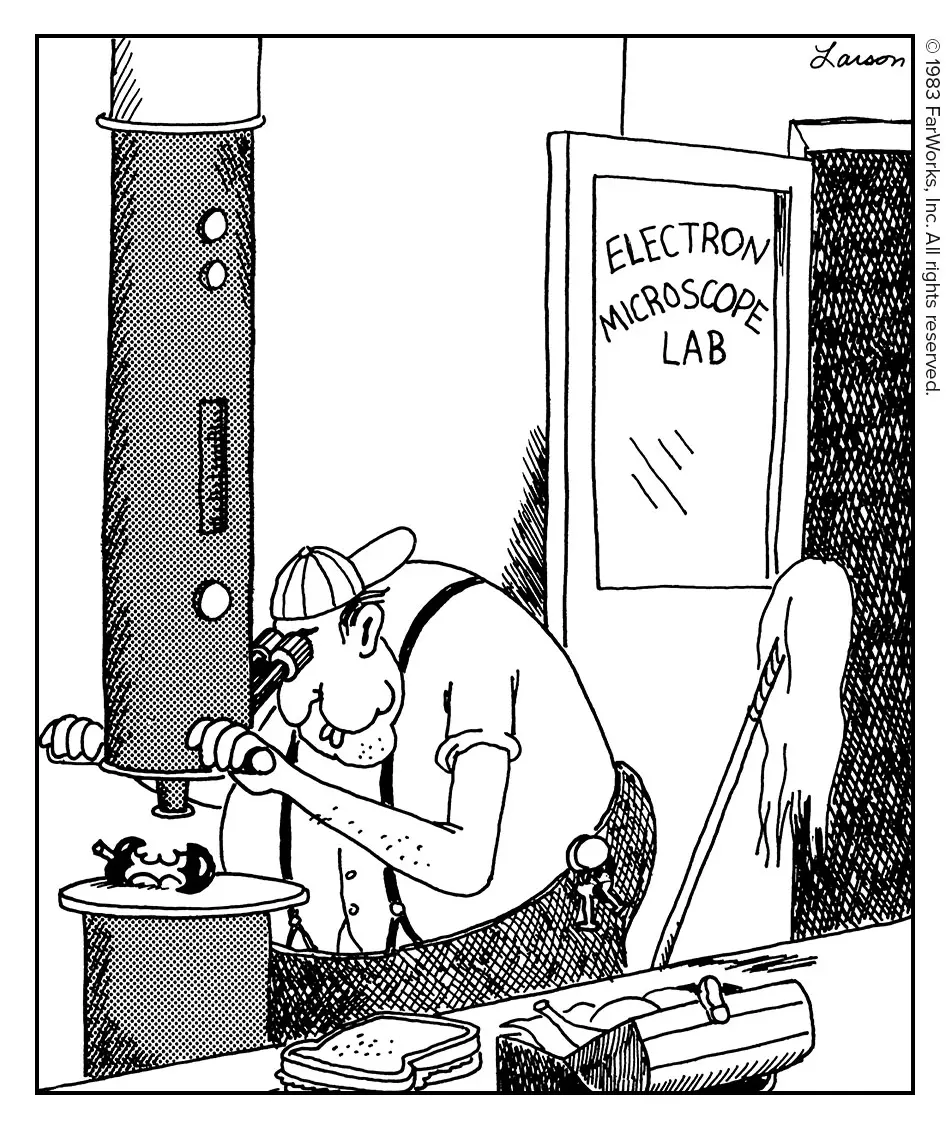
electron microscopes usually operate in a vacuum. If you put organic stuff in there without properly treating the sample, it will damage the equipment
Oh wow. Didn’t know that. I saw a kidney biopsy in an electron microscope before but I never really learned how they worked because I figured I’d never work with one.
They’re super cool! The reason for the vacuum is that electrons are much more likely to scatter in atmosphere than photons, so you want as little air present in the chamber as possible. Also many microscopes generate their electron beams with a heated tungsten filament (which is soo expensive), so iirc the vacuum prevents it from burning up quickly.
Electron miscroscopes often have a “low vacuum” setting for when samples can’t be subjected to such a high vacuum. Usually you need some training before anyone will let you use their electron microscopes.
!subscribe #electronmicroscopefacts
Wow thanks for the information. An electron microscope has to be the coolest microscope. The images I’ve seen were always interesting
If they’re in vacuum, they probably are pretty cool! Other than that tungsten filament that other commenter mentioned, apparently.